










SACRAMENTO, Calif. – The Associated General Contractors of California (AGC of California) has unveiled the findings of its membership survey, offering a snapshot of contractor sentiment for the year ahead. The results show that contractors across the state are entering 2026 with measured confidence, reporting positive expectations for business activity, revenue, and hiring. Compared to last year’s survey, overall demand expectations remain steady, while expectations for revenue growth, hiring, and profitability have moderated slightly in 2026, reflecting a cautiously optimistic outlook for California’s construction industry.
“This survey provides valuable insights from contractors across California,” said Peter Tateishi, chief executive officer of AGC of California. “It equips us to advocate for workforce and policy solutions that remove barriers to building and support the delivery of critical infrastructure projects. By understanding the challenges and opportunities contractors face, we can better align our efforts to drive innovation, improve efficiency, and ensure the construction industry continues to meet the state’s growing needs.”
The 2026 Optimism Survey from AGC of California highlights the following key findings:
- Nearly 62% of respondents anticipate growth or a moderate increase in overall construction activity across California in 2026, while another 17% expect activity to remain strong or expand further, signaling sustained demand statewide, even as growth expectations remain measured.
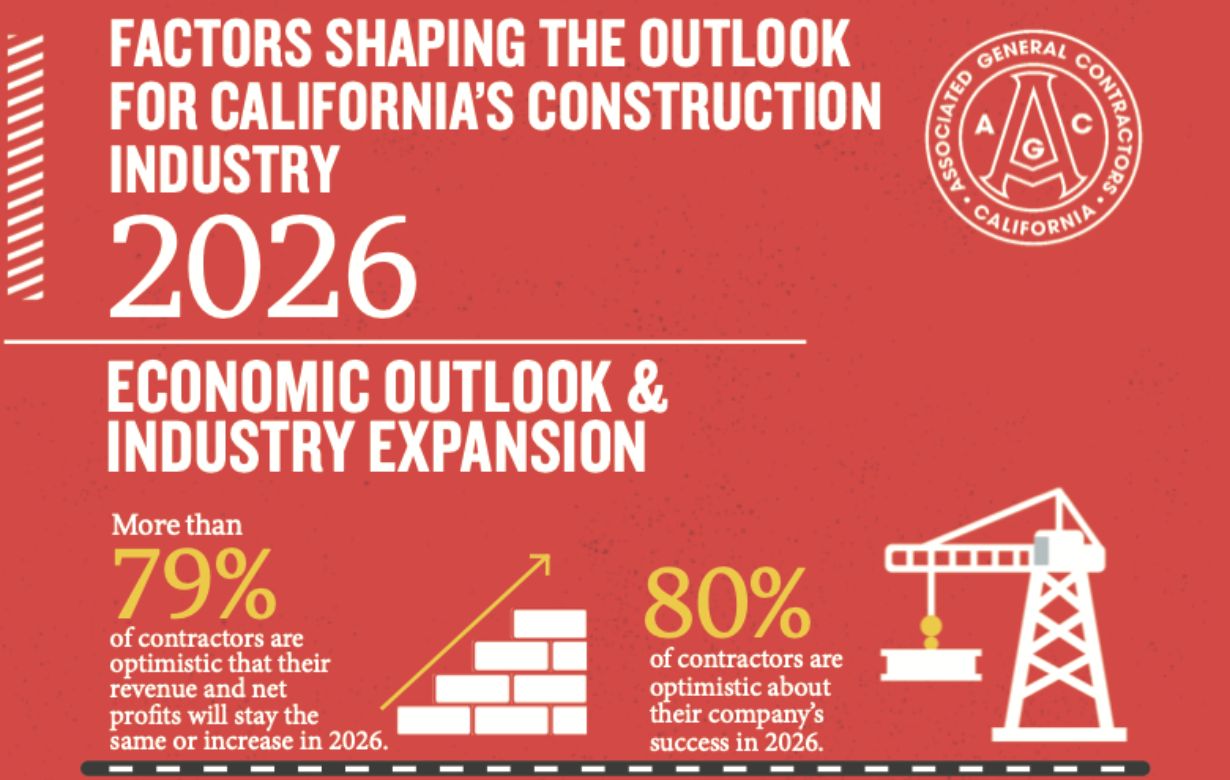
- A majority of contractors (81%) expressed confidence in their own companies’ performance this year. Most respondents project revenue increases in 2026, with firms expecting slight to moderate gains, indicating continued project activity alongside tempered growth expectations.
- About 52% of firms plan to increase hiring in 2026 as they prepare to meet project demand, even as skilled labor remains a priority.
- Profit expectations remain generally positive, with approximately 54% of respondents forecasting net profit growth in 2026 and another 25% expecting stable performance, reflecting cautious optimism amid continued margin pressure.
Outlook varies by market segment.
Contractors in highway/transportation and utility/infrastructure markets report steadier expectations tied to public-sector programs and essential infrastructure investment, with 66% of highway/transportation firms and 69% of utility/infrastructure firms expecting strong or moderate activity in 2026. Revenue expectations in infrastructure-heavy markets are more mixed (60% of highway/transportation firms and 48% of utility/infrastructure firms expect revenue growth), even as workforce needs remain elevated (more than half of highway/transportation firms and 72% of utility/infrastructure firms plan to increase hiring). Building-focused firms report comparatively stronger activity expectations, with nearly 80% anticipating strong or moderate activity, alongside more moderate revenue growth expectations (57%) and continued hiring plans (69%), reflecting cautious confidence shaped by private-market conditions.
Contractors continue to point to persistent challenges heading into 2026. Two-thirds (66%) of respondents cited demand for skilled labor, reinforcing the need for stronger workforce pipeline development. Regulatory compliance remains a concern for 58% of firms, while rising wages and employee benefits added pressure for 45% of participants. Workforce pipeline development was identified as a priority by 25% of respondents, underscoring the need to nurture and train the next generation of talent.
Tateishi emphasized that workforce concerns remain a top priority as contractors prepare for steady work ahead. “That’s why our workforce development initiatives are focused on building a stronger, more reliable talent pipeline for California’s construction industry,” he said.
The findings point to an industry preparing for continued demand in 2026 while navigating workforce pipeline needs, regulatory hurdles, and cost pressures.